Trusted by 150+ Homeowners
Attic Mold Removal in Fairview, TX
- Over 150 5-Star Reviews
- Free Estimates and Quotes
- 100% Satisfaction Guaranteed
- Child, Family & Pet Safe Steps
- 24-Hour Emergency Service
- Fully Licensed & Insured
Don’t Let Attic Mold Take Hold in Your Fairview Home
When you first notice that persistent musty smell wafting down from your attic, it’s easy to dismiss it. Many homeowners in Fairview, TX, make the mistake of thinking it’s just old insulation or a minor issue. But that smell is often the first sign of a much larger problem: attic mold. Ignoring it can lead to serious structural damage and create unhealthy living conditions for your family. You need to address it quickly before it spreads further.
We’ve helped over 165 five-star reviews because we understand the urgency of attic mold. Homeowners around here trust our team for attic mold removal because we respond fast and get the job done right the first time. We know how stressful it is to discover mold in your home, and we’re here to make the process as smooth as possible for you and your family.
- We focus on safely and effectively removing all traces of mold, preventing its return with specialized treatments that target the root cause.
- Our process includes thorough drying and dehumidification of your attic space, crucial for preventing mold from regrowing after removal.
- We provide clear explanations of the mold damage found and the steps we’ll take, so you’re never left in the dark about what’s happening in your home.
How We Tackle Attic Mold Head-On
Dealing with attic mold requires more than just a spray bottle and a scrub brush. It demands a methodical approach, specialized equipment, and a deep understanding of how mold thrives in enclosed spaces. Our team follows a rigorous process designed to not only remove existing mold but also to identify and correct the moisture issues that allowed it to grow in the first place. When you cut corners on attic mold removal, you risk the mold returning, causing further damage and health concerns, and ultimately costing you much more down the line.
Step 1: Initial Assessment and Containment
Our technicians will first conduct a detailed inspection of your attic to pinpoint the extent of the mold growth and identify the moisture source. We then use containment barriers and negative air pressure machines to prevent mold spores from spreading to other parts of your home during the removal process.
Step 2: Mold Remediation
Depending on the severity, we employ various methods to safely remove mold from surfaces. This can include HEPA-filtered vacuums for dry mold and specialized antimicrobial solutions for more established growth. We’re always careful to protect your home’s structure during this phase.
Step 3: Cleaning and Deodorizing
Once the visible mold is gone, we thoroughly clean all affected surfaces to eliminate any remaining mold residues. We then use specialized equipment to neutralize lingering odors, leaving your attic smelling fresh and clean. This step is vital for restoring your attic’s air quality.
Step 4: Drying and Dehumidification
Mold thrives in damp environments. We use industrial-grade dehumidifiers and air movers to ensure your attic is completely dried out, creating an environment where mold cannot easily return. This focus on long-term moisture control is key to preventing recurrence.
Step 5: Final Inspection and Prevention Recommendations
Before we consider the job complete, we perform a final inspection to ensure all mold has been removed and the attic is properly dried. We’ll also provide you with practical recommendations for preventing future mold growth, such as improving ventilation or addressing any persistent leaks. Your attic’s ongoing health is our priority.
Don’t wait until the problem gets worse. If you suspect attic mold, it’s time to get professional help. Contact us today for a swift and thorough inspection.
Warning Signs You Need Attic Mold Removal
Catching attic mold early is crucial for minimizing damage and protecting your health. Many homeowners overlook subtle signs, but these indicators can save you significant time and money in the long run. Paying attention to these warnings can prevent a small issue from becoming a major headache.
Musty Odors That Won’t Go Away
This is often the most obvious sign. If you notice a continuous damp, earthy smell coming from your attic that doesn’t dissipate, it’s a strong indicator of mold growth. It might be subtle at first, but it will likely worsen over time.
Visible Mold Growth
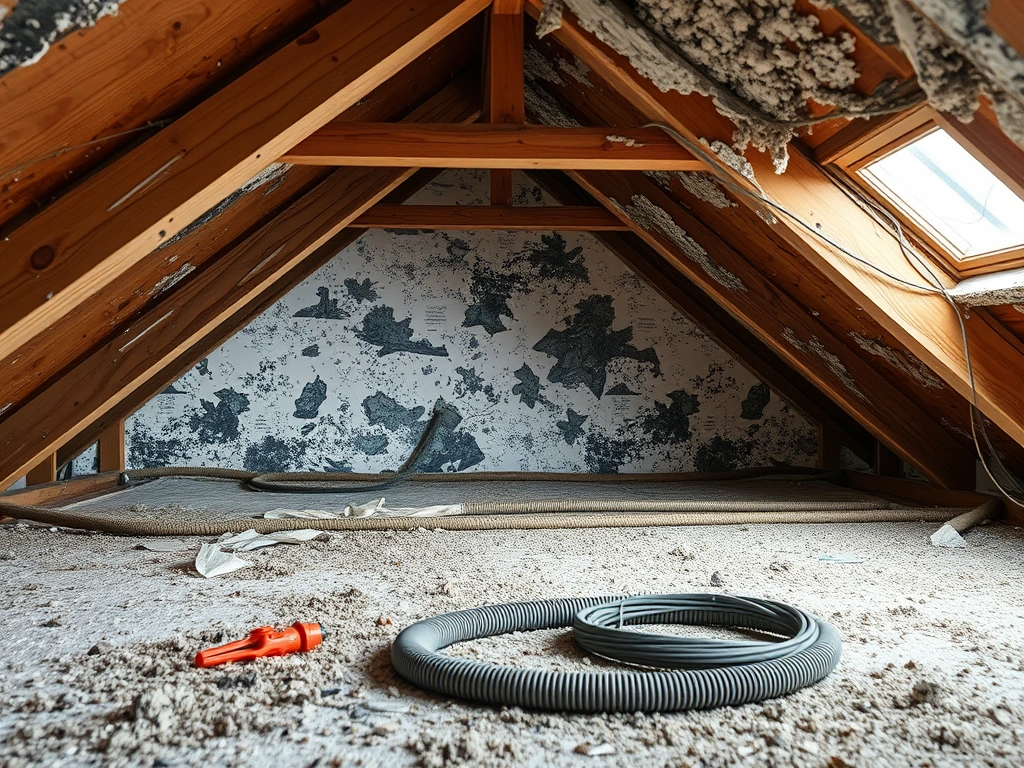
While sometimes hidden, mold can appear as fuzzy or slimy patches of various colors, including black, green, white, or gray. Look for it on wooden beams, insulation, or drywall. Seeing any discoloration like this is a red flag.
Water Stains or Leaks
Any signs of past or present water damage, such as dark spots, peeling paint, or damp patches on your attic ceiling or walls, suggest moisture is present. This is the perfect breeding ground for mold. Addressing water intrusion is the first step.
Increased Allergy Symptoms
Are you or your family experiencing more frequent headaches, coughing, sneezing, or respiratory irritation? Mold spores can trigger allergic reactions and worsen asthma. If symptoms seem to improve when you’re away from home, your attic might be the culprit. Your family’s health is paramount.
Peeling or Warping Materials
Sustained moisture from mold can cause materials like wood and drywall to deteriorate. You might notice paint peeling, drywall sagging, or wood looking warped. This indicates that the mold has been present for a while and is causing structural compromise.
Dark Spots on Wood or Insulation
Mold often appears as dark, discolored spots on surfaces within the attic. This is especially common on the underside of the roof decking or on wooden rafters. These spots are clear evidence of mold contamination that needs immediate attention. Don’t ignore these visible mold signs.
Attic Mold Removal vs. DIY: When To Call a Professional
| Situation | DIY? | Call a Pro? | Why |
|---|---|---|---|
| Small, surface-level mold spots (less than 1 sq ft) on a non-porous surface. | Yes | No | Can usually be cleaned with household cleaners and good ventilation. |
| Extensive mold growth covering large areas of insulation or wood. | No | Yes | Requires specialized equipment and containment to prevent spore spread. |
| Mold accompanied by significant water damage or leaks. | No | Yes | The underlying moisture source must be professionally identified and repaired first. |
| Mold that has penetrated deep into porous materials like drywall or wood. | No | Yes | Porous materials often need to be removed and replaced, not just cleaned. |
| Persistent musty odors that don’t disappear after cleaning. | No | Yes | Indicates mold may be hidden or the moisture source wasn’t fully addressed. |
| Concerns about health effects or existing respiratory conditions. | No | Yes | Professionals have the safety gear and knowledge to protect you and your family. |
While a small patch of mold on a non-porous surface might seem manageable, most attic mold situations require professional intervention. The complexity of attics, the potential for hidden moisture, and the health risks associated with mold spores make it a job best left to trained technicians. Professional removal ensures it’s done safely and effectively.
Attic Mold Removal Cost In Fairview, TX
The cost of attic mold removal in Fairview, TX, can vary significantly. Factors like the size of your attic, the severity of the mold infestation, the type of materials affected, and the complexity of accessing the area all play a role. These figures are general estimates and a detailed inspection is always needed for an exact quote.
| Service | Typical Price Range | What Affects Cost |
|---|---|---|
| Attic Mold Inspection and Assessment | $300 – $700 | Size of attic, complexity of access, need for moisture meter readings. |
| Small Area Mold Removal (up to 10 sq ft) | $500 – $1,500 | Type of mold, surface material (wood vs. insulation), containment needs. |
| Medium Area Mold Removal (10-50 sq ft) | $1,500 – $3,500 | Extent of growth, need for specialized cleaning agents, insulation removal/replacement. |
| Large Area Mold Removal (over 50 sq ft) | $3,500 – $10,000+ | Significant structural involvement, extensive insulation damage, need for structural drying. |
| Mold-Resistant Sealing/Encapsulation | $500 – $2,000 | Area size, type of sealant used, need for additional ventilation improvements. |
| Attic Dehumidification and Air Scrubbing | $300 – $1,000 | Duration of treatment, size of equipment needed, overall humidity levels. |
The exact pricing for your specific situation will depend on a thorough on-site assessment. We offer free, no-obligation estimates so you know exactly what to expect before we begin any work.
Service Areas Near Fairview, TX
Allen, Anna, Argyle, Celina, Coppell, Corinth, Dallas, Denton, Fairview, Farmers Branch, Frisco, Grapevine, Hebron, Highland Village, Irving, Justin, Krugerville, Lake Dallas, Lakewood Village, Lewisville, Little Elm, Lucas, McKinney, North Richland Hills, Oak Point, Pilot Point, Plano, Princeton, Prosper, Richardson, Roanoke, Sanger, Southlake, The Colony, Tom Bean, University Park, Watauga, Westlake, Weston, Wylie
Common Questions About Attic Mold Removal
What is the first thing I should do if I suspect mold in my attic?
The very first thing you should do is avoid disturbing the mold. Don’t try to clean it yourself, especially if it’s widespread, as this can release spores into the air. Instead, try to limit access to the attic and call a professional for an inspection. We can assess the situation safely and determine the best course of action for your home in the area.
How long does attic mold removal typically take?
The timeline for attic mold removal can vary greatly depending on the size of the affected area and the severity of the mold growth. Simple cases might take a day or two, while more extensive infestations requiring structural drying and material replacement could take several days to a week. Our team works efficiently to minimize disruption to your home.
Is attic mold dangerous to my health?
Yes, attic mold can pose significant health risks. Mold spores can cause allergic reactions, asthma attacks, and other respiratory problems for sensitive individuals. Prolonged exposure can lead to more serious health issues. It’s essential to have it removed by professionals who understand the safety protocols involved.
What equipment do you use to remove attic mold?
We use a variety of specialized equipment, including HEPA-filtered vacuums to safely capture mold spores, industrial-grade dehumidifiers and air movers for drying, and specialized antimicrobial solutions for cleaning and treatment. We also employ containment systems like plastic sheeting and negative air machines to ensure mold doesn’t spread during the process.
How can I prevent mold from returning to my attic after it’s removed?
Preventing mold recurrence involves addressing the underlying moisture issues. This often means ensuring proper attic ventilation, fixing any roof leaks promptly, and managing humidity levels. We can help identify the specific causes in your home and provide recommendations for long-term prevention.
Check Our Other Relevant Services
Serving Fairview, TX And Nearby Areas