Trusted by 150+ Homeowners
Subfloor And Under-House Water Leak Repair in North Richland Hills, TX
- Over 150 5-Star Reviews
- Free Estimates and Quotes
- 100% Satisfaction Guaranteed
- Child, Family & Pet Safe Steps
- 24-Hour Emergency Service
- Fully Licensed & Insured
Don’t Let Hidden Water Damage Ruin Your Home
You’re walking through your house in North Richland Hills, TX, and you notice it. A slight softness under your feet, or maybe a strange, damp smell that seems to be coming from nowhere. It’s that sinking feeling when you suspect water is lurking where it shouldn’t be, right beneath your floors. This isn’t just an inconvenience; it’s a serious issue that needs immediate attention before it causes costly structural damage. You need a team that understands the unique challenges of subfloor water intrusion and can tackle it head-on.
Our local homeowners trust us because we’re not just another restoration company. We’re your neighbors, and we’ve helped over 165 families in your neighborhood deal with these stressful situations, earning more than 165 five-star reviews. We get that seeing or smelling water damage is unsettling, and we’re committed to providing clear communication and effective repairs for your subfloor and under-house water leaks. We’re here to get your home back to normal, fast.
- We stop leaks at their source, preventing mold and rot from spreading into your subflooring and foundation.
- Our specialized equipment extracts hidden moisture, drying out crawl spaces and under-house areas completely to avoid long-term problems.
- We restore the integrity of your subfloor, ensuring your floors remain stable and safe for your family.
How We Tackle Subfloor And Under-House Water Leaks
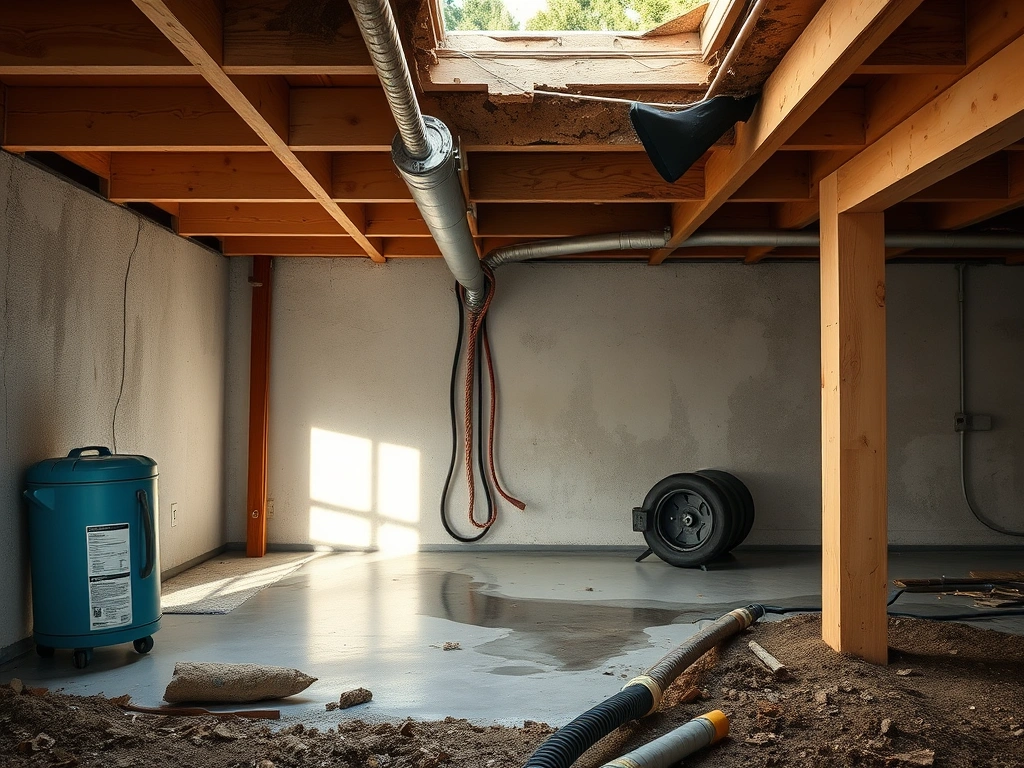
Dealing with water under your house requires a methodical, science-based approach. Simply mopping up visible water isn’t enough. You need to understand where the water came from, how much has seeped into porous materials, and how to dry everything thoroughly without causing further damage. Our crews use advanced techniques and equipment to pinpoint the problem, contain the water, and implement a precise drying protocol. Cutting corners here can lead to persistent mold growth and weakened structural components.
Leak Detection and Assessment
The first step is always finding the exact source of the leak. Our technicians use specialized tools, like moisture meters and thermal imaging cameras, to identify the origin of the water and map out the full extent of the damage. This ensures we address the root cause, not just the symptom, and understand precisely how much of your subfloor and under-house space is affected.
Water Extraction
Once the leak is stopped, we immediately begin removing standing water. We utilize powerful submersible pumps and high-capacity water extractors to remove as much water as possible from crawl spaces and under-house areas. This rapid water removal is crucial for minimizing saturation and preventing further damage to your subflooring and structural elements.
Moisture Mapping and Monitoring
After the bulk of the water is gone, our work isn’t finished. We use advanced moisture meters to create a detailed map of moisture levels throughout your subfloor and surrounding materials. We’ll continue to monitor these levels closely, ensuring that all hidden dampness is identified and targeted for removal. This detailed moisture analysis is key to preventing future issues.
Controlled Drying and Dehumidification
This is where the science really comes into play. We set up professional-grade drying equipment, including industrial air movers and dehumidifiers, to create an optimal drying environment. These machines work together to accelerate evaporation and remove moisture from the air, pulling it out of your subfloor and under-house spaces. This targeted drying process is designed to return materials to their normal moisture content.
Containment and Air Filtration
During the drying process, we often use containment barriers to keep affected areas isolated. This prevents moisture and any potential airborne contaminants from spreading to other parts of your home. We also employ HEPA air scrubbers to filter the air, removing any dust or microscopic particles, ensuring the air in your home is clean and healthy.
Don’t wait for the problem to get worse. Call us now for a fast assessment and expert repair of your subfloor water leak.
Warning Signs You Need Subfloor And Under-House Water Leak Repair
Catching water issues early is your best defense against extensive damage and higher repair costs. Your home will often give you signs that something is wrong, even if you can’t see the water directly. Paying attention to these subtle clues can save you a lot of trouble down the line. Ignoring these signals can lead to serious structural compromise and expensive remediation.
Damp or Musty Odors
That persistent, unpleasant smell, especially in lower levels or near the floor, is a classic indicator of hidden moisture. It’s the scent of mold and mildew beginning to grow in damp environments under your house. This unusual smell is a clear sign that something is wrong.
Soft or Spongy Flooring
When you step on your floor and it feels soft, bouncy, or gives way slightly, it’s a direct warning. Your subfloor may be compromised by water saturation, losing its rigidity. This compromised flooring feel means the wood is likely damaged.
Visible Water Stains or Dark Spots
Look for discoloration or dark patches on your baseboards, walls near the floor, or even on the underside of your floorboards if you have an accessible crawl space. These water stains are a visible sign that water has been present and is likely still lurking.
Warped or Buckling Floorboards
If your hardwood floors are starting to cup, crown, or buckle, it’s a strong indication that excessive moisture is affecting the wood from below. This warped flooring appearance means the wood is expanding due to water.
Mold or Mildew Growth
Any sign of visible mold or mildew, especially in dark, damp areas like crawl spaces or around plumbing penetrations under the house, points directly to a water problem. This visible mold growth poses health risks and indicates a significant moisture issue.
Increased Humidity Levels
If your home suddenly feels much more humid than usual, even when the air conditioning is running, it could be due to unchecked moisture escaping from under your house. This elevated humidity can make your home feel clammy and uncomfortable.
Subfloor And Under-House Water Leak Repair vs. DIY: When To Call a Professional
| Situation | DIY? | Call a Pro? | Why |
|---|---|---|---|
| Minor condensation in an easily accessible crawl space | Yes, with caution | No | Simple evaporation might be enough if it’s minimal and not recurring. |
| Suspected slow leak from a visible pipe under the house | No | Yes | Pinpointing the exact spot and repairing plumbing requires expertise and specific tools. |
| Musty odor but no visible water | No | Yes | Hidden moisture needs specialized detection and drying equipment to prevent mold. |
| Standing water in a crawl space | No | Yes | Large amounts of water require professional extraction and thorough drying protocols. |
| Warped floorboards or soft spots in the subfloor | No | Yes | Structural damage needs assessment and repair by experienced technicians. |
| Leak originating from a foundation crack | No | Yes | Foundation issues are complex and require specialized structural and water management knowledge. |
For anything beyond minor, easily managed condensation, calling a professional is almost always the right move for subfloor and under-house water leaks. Our team has the specialized equipment and technical knowledge to accurately diagnose the problem and implement effective, lasting repairs. Trying to handle significant water intrusion yourself can easily lead to missed damage and costlier repairs later.
Subfloor And Under-House Water Leak Repair Cost In North Richland Hills, TX
The cost of repairing subfloor and under-house water leaks in North Richland Hills, TX, can vary significantly. Factors like the source of the leak, the size of the affected area, the amount of water present, and the type of subfloor material all play a role. These figures are estimates for the local area and reflect typical scenarios.
| Service Aspect | Typical Price Range | What Affects Cost |
|---|---|---|
| Leak Detection & Assessment | $300 – $750 | Complexity of the issue and required technology. |
| Water Extraction (Standing Water) | $500 – $2,000 | Volume of water and accessibility of the area. |
| Subfloor Drying & Dehumidification | $700 – $3,500 | Size of the affected space and duration of drying needed. |
| Minor Subfloor Repair (e.g., patching) | $400 – $1,200 | Extent of material damage and complexity of the patch. |
| Mold Remediation (if necessary) | $500 – $4,000+ | Severity and location of mold growth. |
| Plumbing Repair (if leak source) | $200 – $1,000 | Type of pipe, location, and complexity of the repair. |
Getting a precise quote requires an on-site inspection by our trained technicians. We offer free, no-obligation estimates so you know exactly what to expect before any work begins.
Service Areas Near North Richland Hills, TX
Fort Worth, Arlington, Euless, Bedford, Hurst, Grapevine, Colleyville, Southlake, Keller, Roanoke, Haslet, Saginaw, Lakeside, White Settlement, Benbrook, Crowley, Burleson, Mansfield, Azle, Haltom City
Common Questions About Subfloor And Under-House Water Leak Repair
What is the fastest way to dry out a wet subfloor?
The fastest way to dry out a wet subfloor involves professional equipment. We use industrial-strength air movers to circulate air and specialized dehumidifiers to pull moisture from the air and materials. This accelerated drying process is far more effective than natural evaporation, especially in enclosed spaces like crawl spaces. We aim to restore normal moisture levels quickly to prevent further damage.
How much does subfloor water damage repair typically cost in the DFW area?
Costs for subfloor water damage repair in the DFW area can range from a few hundred dollars for minor issues to several thousand for extensive damage. Factors include the source of the leak, the amount of water, the size of the affected area, and whether mold remediation is needed. We provide detailed estimates after a thorough assessment to give you an accurate picture of the cost.
Will my homeowner’s insurance cover subfloor water leak repairs?
Homeowner’s insurance coverage for subfloor water leaks often depends on the cause of the water. Damage from sudden, accidental sources like a burst pipe is usually covered, while slow leaks or issues due to poor maintenance might not be. It’s best to check your policy details and contact your insurance provider. We can help document the damage to assist with your claim, providing clear photographic evidence.
How long does the subfloor drying process usually take?
The subfloor drying process typically takes between 3 to 10 days, but this can vary. Factors influencing the timeline include the initial moisture content, the type of building materials, ambient humidity, and the effectiveness of the drying equipment. We continuously monitor moisture levels to ensure we dry the area efficiently and completely, but we never rush the process if materials aren’t yet at acceptable levels.
Is it safe to live in a house with a wet subfloor?
It’s generally not advisable to live in a house with a wet subfloor for extended periods. The moisture creates an environment conducive to mold and mildew growth, which can cause respiratory problems and allergic reactions. Additionally, prolonged dampness can weaken the structural integrity of your subfloor and home. Addressing the leak and drying the area promptly is crucial for your health and home safety.
Check Our Other Relevant Services
- Kitchen Fire Cleanup & Restoration in North Richland Hills, TX
- School & Daycare Sanitization in North Richland Hills, TX
Serving North Richland Hills, TX And Nearby Areas