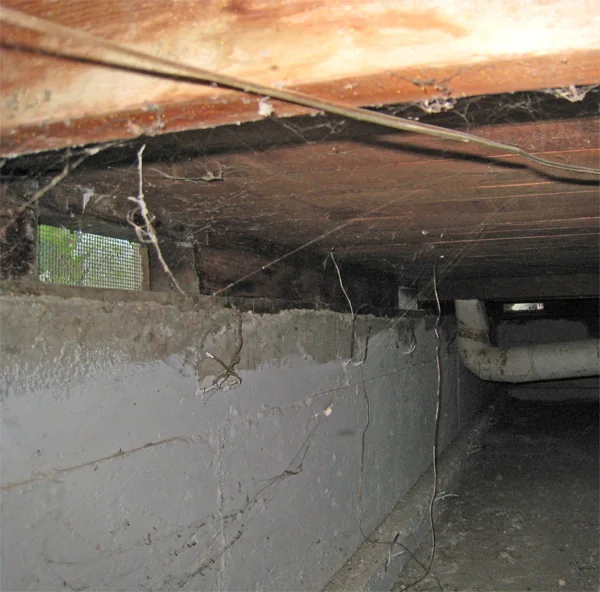
Most Dallas homes are slab-on-grade, but many older pier-and-beam houses sit over a crawlspace that collects water. Local crews pump it out, dry the framing, and address the moisture that threatens the floor above.

A crew enters the crawlspace to gauge standing water, check the joists and subfloor, and identify whether the source is groundwater, runoff, or a plumbing leak.
Submersible pumps and extractors clear standing water, and saturated debris or ruined vapor barrier is removed so the space can actually dry.
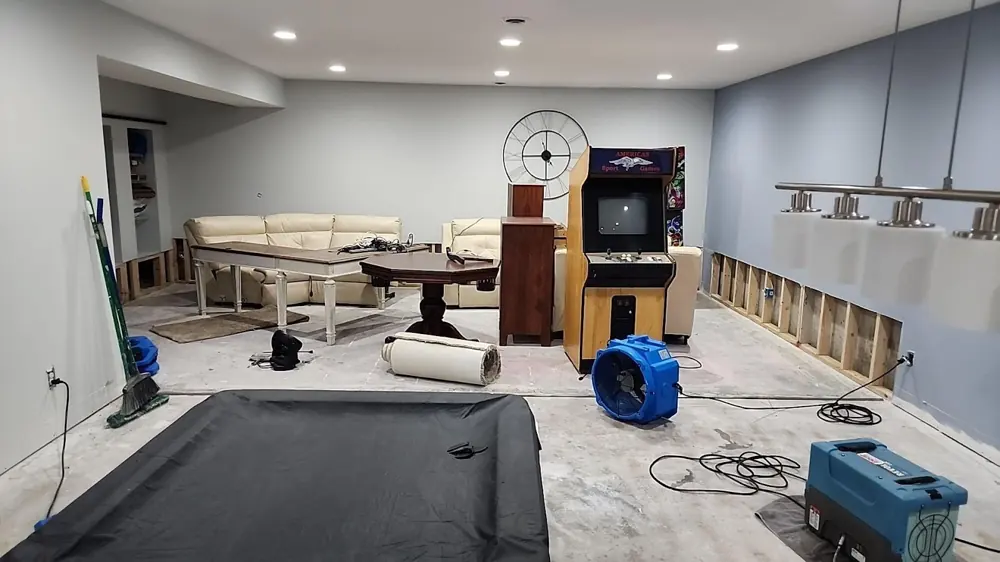
Air movers and dehumidifiers are staged in the crawlspace to dry the framing and subfloor, pulling humidity down until moisture readings confirm the space is dry.
Affected surfaces are treated to discourage mold growth, and moisture readings and photos are documented for the homeowner and the insurance carrier.

While help is on the way, these first steps, done only where it is safe, limit the damage and protect the insurance claim.
Shut the supply off at the source, or close the home's main valve if the source is not obvious. Stopping the flow limits the damage more than anything else.
Switch off electricity to the affected area, but only if the breaker can be reached without standing in or touching the water.
Get a crew dispatched right away. The sooner extraction and drying begin, the more flooring, drywall, and belongings can be saved.
Take photos and a short video of the water and the affected rooms before anything is moved, so the insurance claim starts strong.
Crawlspace water removal in Dallas typically runs from about $1,000 to $4,500, depending on how much standing water is present, how saturated the joists and subfloor have become, and whether a vapor barrier must be replaced. A quick pump-out after one storm sits at the low end, while a long-standing groundwater problem with rotting framing reaches the top. The crew documents readings and photos so any covered portion can be submitted to the insurance carrier.
Crews reach Dallas, Dallas County, and the surrounding North Texas communities fast, from Oak Cliff, the Bishop Arts District, and Lakewood to Highland Park, University Park, Irving, Richardson, and Garland. See the full list on the areas served across Dallas page.
See all areas servedEvery loss is photographed, measured, and logged from the first visit, so the paperwork holds up with the insurance carrier.
Technicians follow recognized IICRC drying standards and prove it with daily moisture readings on Dallas homes, not guesswork.
Emergency dispatch any hour of the day or night, with a real crew on the way across North Texas, not a callback in the morning.
A real crew dispatched any hour, not a callback in the morning.
Trained technicians following recognized IICRC drying standards.
Truck-mounted, portable, and submersible for any size loss.
The loss is documented and billed to the carrier directly.
Many older ones do. While newer Dallas homes are slab-on-grade, a good share of the pre-war and mid-century housing stock sits on pier-and-beam foundations with a crawlspace that can collect water.
Because moisture there rises. Wet joists and subfloor rot over time, mold under the floor affects indoor air, and trapped humidity raises moisture levels throughout the living space above.
Crews use low-profile submersible pumps and extractors to clear standing water, then stage compact air movers and dehumidifiers in the space to dry the framing and subfloor.
The crew stops an active plumbing leak from feeding the space and flags repairs, such as pipe work or drainage grading, for a qualified contractor. Groundwater intrusion is addressed with drying and moisture control.
Dallas crews are on call 24 hours a day, local and fast, and can be on the way within the hour.
Call (945) 307-0757