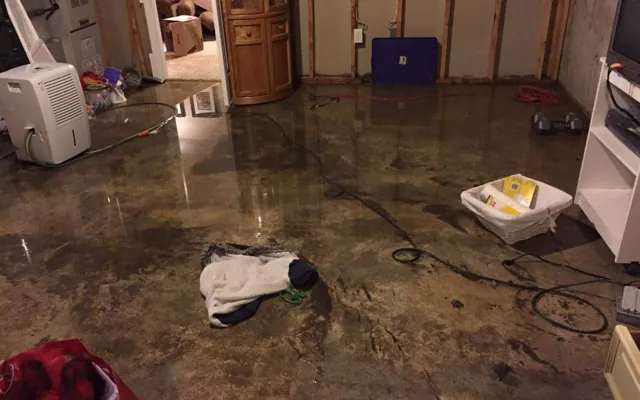
A failing water heater can seep slowly or dump its whole tank at once. Local crews in Dallas extract the water, dry the surrounding structure, and stop it before it spreads through the walls and floor.

A crew arrives quickly, confirms the water and power to the unit are off, and assesses how far the leak has spread from the garage, closet, or attic.
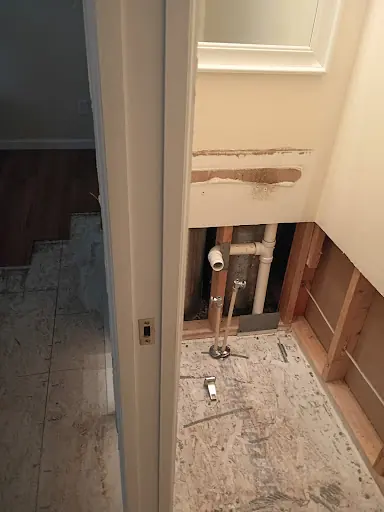
Standing water is extracted, and wet drywall, baseboard, or ceiling near the unit is opened where water traveled so trapped moisture can be reached.
Air movers and dehumidifiers dry the surrounding framing, flooring, and any ceiling below an attic unit, with moisture checked daily until dry.
Materials are metered until dry, the heater is flagged for a qualified plumbing contractor, and readings and photos are documented for the carrier.

While help is on the way, these first steps, done only where it is safe, limit the damage and protect the insurance claim.
Shut the supply off at the source, or close the home's main valve if the source is not obvious. Stopping the flow limits the damage more than anything else.
Switch off electricity to the affected area, but only if the breaker can be reached without standing in or touching the water.
Get a crew dispatched right away. The sooner extraction and drying begin, the more flooring, drywall, and belongings can be saved.
Take photos and a short video of the water and the affected rooms before anything is moved, so the insurance claim starts strong.
Water heater leak cleanup in Dallas usually runs from about $800 to $4,500, driven by where the unit sits and how far the water spread. A slow seep in a garage caught early sits at the low end, while an attic tank that ruptured and dropped water through a ceiling reaches the top. The plumbing replacement is separate. When damage warrants it, the crew documents moisture readings and photos for the insurance carrier.
Crews reach Dallas, Dallas County, and the surrounding North Texas communities fast, from Oak Cliff, the Bishop Arts District, and Lakewood to Highland Park, University Park, Irving, Richardson, and Garland. See the full list on the areas served across Dallas page.
See all areas servedEvery loss is photographed, measured, and logged from the first visit, so the paperwork holds up with the insurance carrier.
Technicians follow recognized IICRC drying standards and prove it with daily moisture readings on Dallas homes, not guesswork.
Emergency dispatch any hour of the day or night, with a real crew on the way across North Texas, not a callback in the morning.
A real crew dispatched any hour, not a callback in the morning.
Trained technicians following recognized IICRC drying standards.
Truck-mounted, portable, and submersible for any size loss.
The loss is documented and billed to the carrier directly.
Watch for water or rust around the base, moisture on the floor near the unit, rumbling from sediment, or a drop in hot water. A slow seep often precedes a larger failure, so early signs are worth acting on.
Because a leak from an attic unit drips straight down through the ceiling into the living space below. Many local homes place the water heater in the attic, so a rupture there causes more spread than a garage unit.
The crew stops the water, dries the damage, and flags the unit for a qualified plumbing contractor to replace. The cleanup itself focuses on extraction, structural drying, and documentation.
The resulting water damage is often covered even when the tank replacement is not. The crew documents the moisture and damage separately so the homeowner can present a clear claim to the carrier.
Dallas crews are on call 24 hours a day, local and fast, and can be on the way within the hour.
Call (945) 307-0757