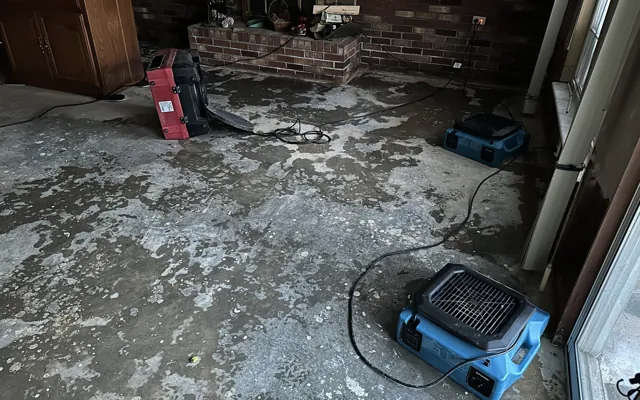
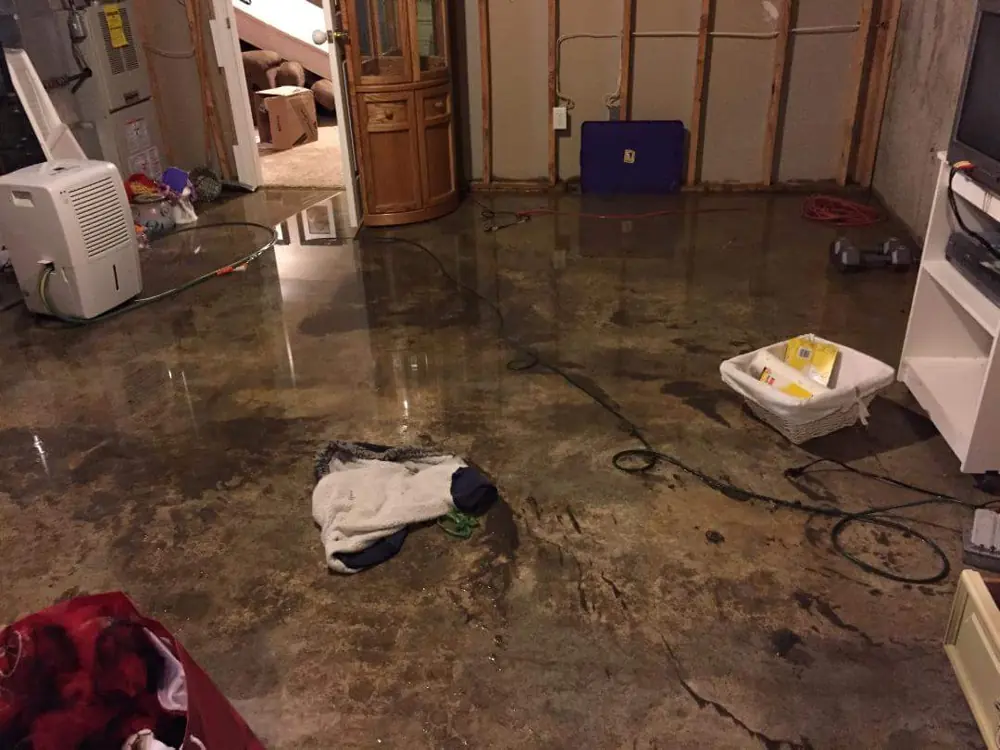
Dallas storms bring hail, torrential rain, and flash flooding along the Trinity and its creeks. Local crews respond fast to extract the water, remove what is ruined, and dry homes back to safe, verified readings.

A crew responds as soon as it is safe, shuts down electrical hazards in flooded areas, and assesses how far the storm water spread through the home.
Submersible pumps and truck-mounted units clear standing water from ground-floor rooms, garages, and the low points across the slab.
Storm runoff is treated as contaminated, so soaked porous materials are removed and disposed of and the affected surfaces are cleaned and sanitized.
Commercial air movers and dehumidifiers dry the framing and finishes, moisture is metered to dry readings, and the loss is documented for the carrier.

While help is on the way, these first steps, done only where it is safe, limit the damage and protect the insurance claim.
Shut the supply off at the source, or close the home's main valve if the source is not obvious. Stopping the flow limits the damage more than anything else.
Switch off electricity to the affected area, but only if the breaker can be reached without standing in or touching the water.
Get a crew dispatched right away. The sooner extraction and drying begin, the more flooring, drywall, and belongings can be saved.
Take photos and a short video of the water and the affected rooms before anything is moved, so the insurance claim starts strong.
Storm and flood cleanup in Dallas varies widely, commonly from about $2,500 to $10,000 or more, because a single event can flood several rooms and carry contamination. Cost is driven by how deep and how long the water sat, how much material must be removed and sanitized, and the size of the drying effort. Rising floodwater is typically covered by separate flood insurance rather than a standard homeowners policy, and the crew documents everything for the appropriate claim.
Crews reach Dallas, Dallas County, and the surrounding North Texas communities fast, from Oak Cliff, the Bishop Arts District, and Lakewood to Highland Park, University Park, Irving, Richardson, and Garland. See the full list on the areas served across Dallas page.
See all areas servedEvery loss is photographed, measured, and logged from the first visit, so the paperwork holds up with the insurance carrier.
Technicians follow recognized IICRC drying standards and prove it with daily moisture readings on Dallas homes, not guesswork.
Emergency dispatch any hour of the day or night, with a real crew on the way across North Texas, not a callback in the morning.
A real crew dispatched any hour, not a callback in the morning.
Trained technicians following recognized IICRC drying standards.
Truck-mounted, portable, and submersible for any size loss.
The loss is documented and billed to the carrier directly.
It is best not to. Storm runoff mixes with soil, sewage, and debris and is treated as contaminated. Crews use containment and protective equipment, remove soaked porous materials, and sanitize surfaces before drying.
As soon as it is safe to enter. Standing water and high humidity feed mold within a day or two, so quick extraction and drying limit both the health risk and the total repair cost.
It depends on the source. Wind-driven rain through a damaged roof may be covered, while rising floodwater usually requires separate flood insurance. The crew documents the water source and damage for the right claim.
The crew extracts and dries the interior and provides temporary roof tarping to stop more water. Permanent roof and structural repairs are flagged for a qualified contractor.
Dallas crews are on call 24 hours a day, local and fast, and can be on the way within the hour.
Call (945) 307-0757