When water invades a Forest Hills, TX home, every hour matters. Local crews respond within about an hour to extract standing water, following IICRC-standard methods to protect mid-century foundations and prevent hidden mold.

Crews reach Forest Hills quickly from central Dallas, often within an hour of the call. This fast dispatch is crucial because water left standing on the area's clay soil can quickly wick into slab foundations and walls.
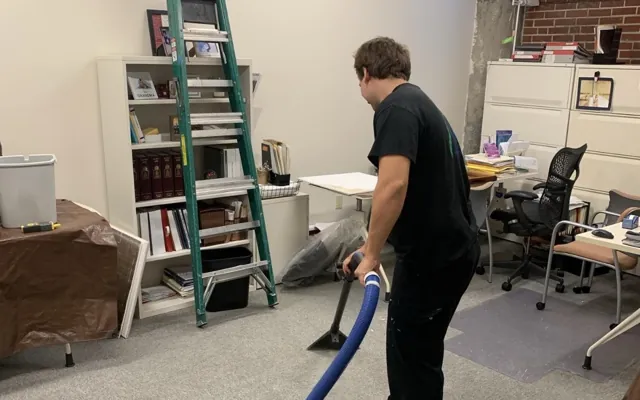
Technicians use submersible pumps and truck mounted extractors to remove the bulk water, starting from the lowest points in the home. This rapid removal is the first defense against structural damage in these older houses.
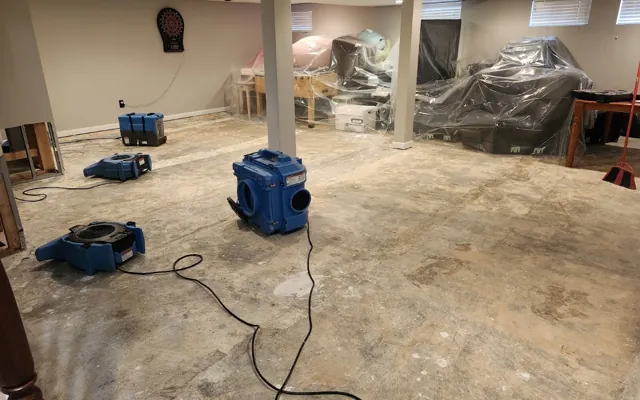
Using moisture meters and cameras, the crew locates hidden water in walls, under flooring, and within cabinets. This precise mapping ensures no damp pockets are left behind to foster mold growth in the humid, lake adjacent climate.

Water extraction in Forest Hills usually runs from about $500 to $3,000 for the extraction and initial drying setup, with the total loss cost depending on how much follows. A quick pump-out of a contained spill sits at the low end, while extracting a whole-home flood and staging extensive drying reaches the top. Extraction is typically part of a covered water loss, and the crew documents the water volume, moisture readings, and photos for the carrier.
In Forest Hills, the combination of mature ranch homes and proximity to White Rock Lake creates distinct water damage risks. Decades-old plumbing lines in these houses can fail, and storm runoff naturally flows toward the lake, sometimes backing up into nearby properties. A quick, professional water extraction is the critical first step to protect the flat slab foundations common in this East Dallas neighborhood. Mid-century plumbing in Forest Hills' ranch homes is a common source of leaks. High humidity from White Rock Lake can slow natural drying, and heavy storms sometimes overwhelm drainage, directing runoff toward lake-adjacent properties. From Forest Hills, crews also cover nearby University Park, Lakewood, M Streets, Highland Park, Elmwood, Buckner Terrace. See every neighborhood and town on the full service area page.
See all areas servedEvery loss is photographed, measured, and logged from the first visit, so the paperwork holds up with the insurance carrier.
Technicians follow recognized IICRC drying standards and prove it with daily moisture readings on Forest Hills homes, not guesswork.
Emergency dispatch any hour of the day or night, with a real crew on the way across North Texas, not a callback in the morning.
A real crew dispatched any hour, not a callback in the morning.
Trained technicians following recognized IICRC drying standards.
Truck-mounted, portable, and submersible for any size loss.
The loss is documented and billed to the carrier directly.
For most homes in Forest Hills, the water extraction and initial drying setup typically ranges from about $500 to $3,000. A simple, contained leak is at the lower end, while extracting a widespread flood from a storm or supply line break, requiring extensive drying equipment, reaches the higher range. The crew documents all work to support the insurance claim.
Forest Hills homes often sit on the flat, clay rich soil of the Blackland Prairie, which does not drain quickly. Standing water can rapidly seep into slab foundations and wick up into walls. The area's humidity, influenced by White Rock Lake, can also accelerate mold growth if wet materials are not extracted and dried promptly.
Crews are on call 24 hours a day and can be on the way to Forest Hills within the hour.
Call (945) 307-0757